

This seminar will explain the grounds of sustainable management of heritage. The students are invited to participate in an exercise during which they will plan actions for a given museum and its collections.
There is no doubt that in the public consciousness, heritage resources are a value of exceptional importance that should be cared for, as they are one of the most important elements of the identity of individuals, local, national and pan-national communities. In economic terms, heritage resources are often the basis for the cultural industry and tourism development, and thus contribute to sustainable development and employment and wealth. However, quite recently the view has emerged that heritage creates a separate sector of the economy termed heritage economy. Like every sector of the economy, it is supported by scientific research that forms a new and separate scientific discipline called heritage science. In a nutshell, two strategic research directions can be identified. The first aims to create information about the heritage resource, and the second aims to preserve this resource. In the first area, in addition to traditional types of research such as archaeometry, paleometry, and technological art history, new research such as neuroscience in heritage and heritage computing are dynamically developing due to technological progress. The second area focused on the preservation of heritage resources addresses fact the in most cases it is not renewable resource and traditionally was represented by conservation and heritage management. The sustainability aspect is a new element in this area. Sustainable conservation or management of heritage is not about the conservation, preservation, restoration or sustenance of artifacts or practices, even insofar as many of those actions are of critical importance; rather it is about weighing the consequences of such actions on the most disenfranchised members of society and on the global environment at large.
Łukasz Bratasz graduated in physics from the Jagiellonian University in Krakow, Poland and received a PhD in 2002 from the same university. In the same year he joined the staff of the Jerzy Haber Institute, Polish Academy of Sciences, Krakow. For many years he headed the Laboratory of Analysis and Non-Destructive Testing of Artefacts in the National Museum in Krakow as well as he was head of the Sustainable Conservation Lab, at the Institute for the Preservation of Cultural Heritage, Yale University. Currently, he is associate professor at Jerzy Haber Institute. His research focuses on degradation mechanism of heritage objects due to interaction with environmental, risk assessment, sustainable preservation of heritage resources, energy efficient control of environment in museums and historic buildings, impact of global climate change on cultural heritage. He took part or coordinated 31 national and international research projects in the field of cultural heritage.
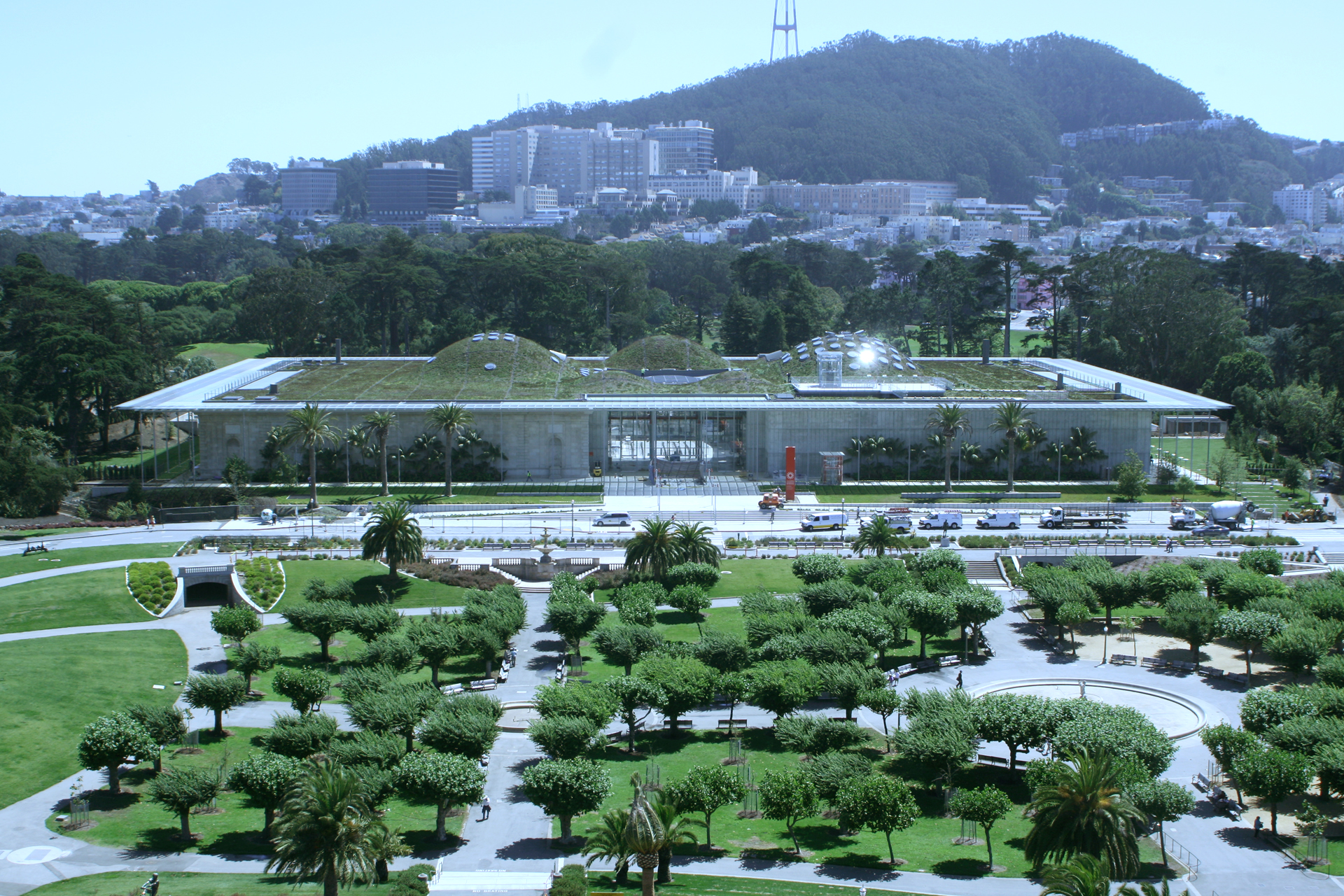
California Academy of Sciences
No machine-readable author provided. Leonard G. assumed (based on copyright claims)., Public domain, via Wikimedia Commons
