I am a doctoral candidate in the Department of Early Modern History as part of the NCN OPUS-18 scholarship “Secularisation of the West: Tacitism from the 16th to the 18th century”. My dissertation, entitled “The Christian Prince: Tacitism as a Novel Theory of Politics in Spain, 1590–1650”, deals with the reception of the Roman historian Cornelius Tacitus in early modern Spain. During my research, I discovered the importance of the history of printing press, as Spanish books had a particular structure determined by royal pragmatics. Without this knowledge, it is not easy to understand the content of Spanish political books and their influence on society. Therefore, I complemented my research with a study of the publishing market in Madrid, where most of the books I analysed originated. In January, I completed archival research in the city of Madrid, Spain. This research is the result of a collaboration with the Martynas Mažvydas National Library of Lithuania, which organized the international conference “Printing Centers and Peripheries in the Early Modern Period”, on October 5-6, 2023 (abstract is available at the following link: https://konferencijos.lnb.lt/
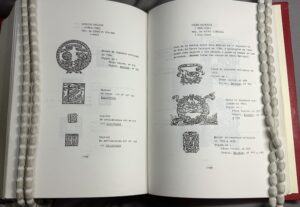
The main topic of this study is the presence of women in Spanish publishing houses, especially in Madrilenian publishing houses, between the sixteenth and seventeenth centuries. This research was carried out in the Archivo Histórico Nacional, Archivo Histórico de Protocolos, Archivo Regional de la Comunidad de Madrid, Biblioteca Nacional de España and focused on documents such as disputes between publishers (pleitos), wills, lawsuits, agreements between publishers and authors (conciertos), cession and sale of the privilege (cession y venta del privilegio de impresión). The most important and least studied notarial documents were found in the Historical Archive of Protocols. In the Spanish academic context, the role of women in the Spanish book market of the XVI-XVII centuries is well known. I have tried to better classify their role in the political context of the control of the book market by confirming their importance in the transmission of the family business, but also in matters of proper decision-making.
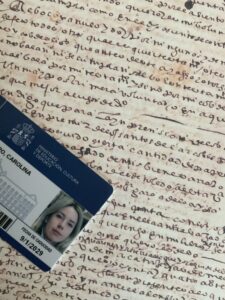
Among the documents analyzed, the following are worth mentioning: “Carta de dote de María Rodríguez de Rivalde, viuda que fue de Pedro de Madrigal, impresor, que aporta a su matrimonio con Juan Lequerica” (Tomo 2238, f.575r-583v); the contract of assignment and sale of the privilege of Cervantes’ “Novelas Ejemplares” text in favor of Francisco de Robles, King’s bookseller (ES.28079.AHPM/0502.001//T.0 001678,f.451r-452v); “Pleito de varios impresores de Madrid contra Teresa Juntí por el privilegio perpetuo que esta tiene concedido por el que sólo se pueden” (Archivo Histórico Nacional, CONSEJOS,5528,Exp.1); “Proceso contra Luis Sánchez, impresor, por introducir en el reino libros sin licencia. Madrid” (Archivo Histórico Nacional, CONSEJOS,25395,Exp.3); “Pleito entre María de Quiñones, viuda, impresora de libros, y el Hospital de los Desamparados de Madrid” (Archivo Histórico Nacional, CONSEJOS,27738,Exp.9). Then I analyzed the title pages and prefaces of selected works published under the direction of María Rodríguez de Rivalde and María de Quiñones (heirs of Pedro de Madrigal) and Ana de Carasa (widow of Luis Sánchez). My aim is to highlight the value of these documents for the study of the history of Spanish politics. The results of this research will be available as an open access publication in the conference proceedings of the Vilnius National Library (https://journals.lnb.lt/